Deal-Hunting Guides
Steam Deck vs ROG Ally: Which Handheld Gaming PC Wins?
Has been buying open-box and returned stock for over a decade, and built Warehouse Watcher to stop losing track of it.
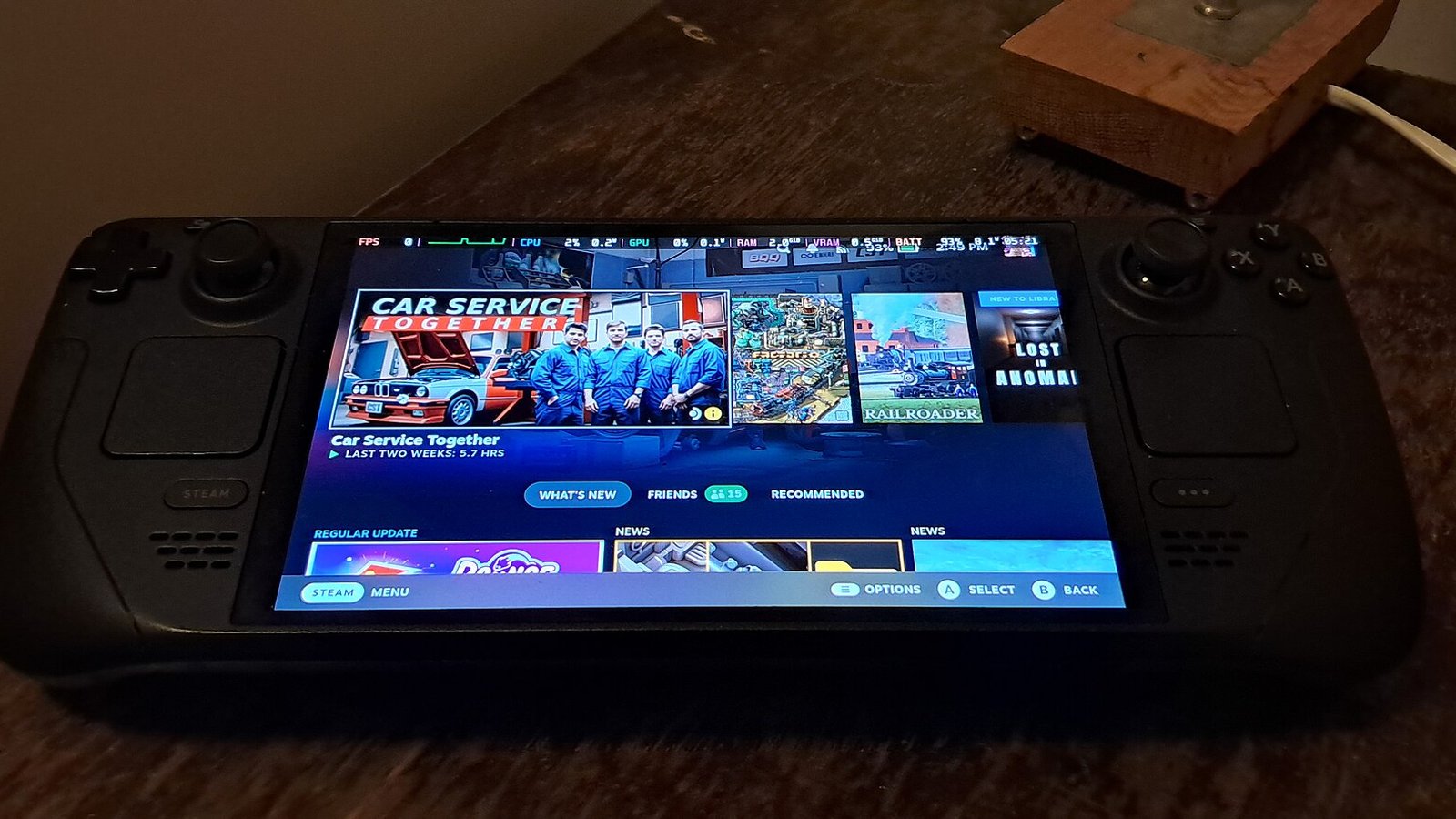
Steam Deck vs ROG Ally is the handheld gaming question that Reddit will not stop asking: the Steam Deck OLED is the better buy for most people, thanks to its HDR OLED screen, console-like SteamOS and lower price. The ASUS ROG Ally X is the faster machine and runs Windows, so it plays everything including Game Pass, but it costs more and needs more tinkering. Thesis: buy the Deck if you want games that just work; buy the Ally X if you want maximum performance and the whole PC library.
This fight has run for years across r/SteamDeck and r/ROGAlly threads, some with hundreds of comments, and the arguments are real: owners trade frame-rate numbers, battery-drain stories and reports on which machine actually leaves the dock. This guide settles it buyer by buyer, with 2026 prices factored in.
Disclosure: As an Amazon Associate, Warehouse Watcher earns from qualifying purchases. Product links below are affiliate links and don't change the price you pay. Learn more.
Steam Deck vs ROG Ally: the spec sheet
How the two compare on paper. Prices are US list; street prices move, especially during sales.
- Steam Deck OLED (512GB / 1TB): 7.4-inch HDR OLED, 1280x800, 90Hz, up to 1,000 nits HDR peak; custom AMD 6nm APU (Zen 2, 4 cores / 8 threads, RDNA 2 with 8 compute units); 16GB LPDDR5-6400; 512GB or 1TB NVMe; 50Wh battery rated 3 to 12 hours; about 640g; SteamOS. US$789 / US$949 after Valve's May 2026 increase (was US$549 / US$649).
- ASUS ROG Ally X (2024, 1TB): 7-inch IPS, 1920x1080, 120Hz; AMD Ryzen Z1 Extreme (Zen 4, 8 cores / 16 threads, RDNA 3 with 12 compute units); 24GB LPDDR5X-7500; 1TB NVMe; 80Wh battery; Windows 11. Launched at US$799.
- Newer options: ASUS replaced the 2024 Ally line in October 2025 with the ROG Xbox Ally range. The ROG Xbox Ally X costs US$999.99 (Ryzen AI Z2 Extreme, 24GB LPDDR5X-8000, 80Wh), and the base ROG Xbox Ally costs US$599.99.
The headline gap: the Ally X has twice the CPU threads, more and newer GPU compute units, and 50 percent more RAM. The Deck answers with the better screen and a lower price.
Steam Deck vs ROG Ally performance: raw power vs polish
The ROG Ally X is the faster machine, and it is not close. Its Zen 4 chip with 12 RDNA 3 compute units and 24GB of fast RAM runs demanding games at higher settings and frame rates than the Deck's older Zen 2 / RDNA 2 APU can manage. In reviewer testing, the Ally X held around 61 FPS in Cyberpunk 2077 at 720p, where the Steam Deck has to compromise harder.
But raw speed is not the whole story. The Deck renders at 1280x800, so it pushes far fewer pixels, and Valve's Proton layer means most of the Steam library runs with no fiddling. Owners describe it as polish versus power: the Ally X wins benchmarks; the Deck wins pick-up-and-play.
Verdict: Ally X for frame rates in demanding games; Deck for a library you would rather play than troubleshoot.
Steam Deck vs ROG Ally screen and battery life
This is the Deck's clearest win. Its 7.4-inch HDR OLED delivers perfect blacks, punchy contrast and 1,000 nits of HDR peak brightness. The Ally X counters with a sharper 1920x1080 IPS panel at 120Hz, smoother in motion and crisper in text, but it cannot touch the OLED's contrast.
Battery is efficiency against capacity. The Deck's 50Wh battery is small, but the efficient chip and SteamOS sip power: 3 to 12 hours depending on the game, with indie titles lasting most of a day. The Ally X packs a much bigger 80Wh battery, but its thirstier chip eats the advantage in demanding games. The Deck is also lighter at about 640g.
Verdict on screen and battery: Deck for image quality and long sessions of lighter games; Ally X for high-refresh smoothness and the biggest battery in the fight.
Steam Deck vs ROG Ally software: SteamOS vs Windows 11
SteamOS is the Deck's secret weapon. It boots straight into your library, suspends and resumes games instantly like a console, and Valve's verified program tells you before you buy whether a game runs well. For many owners, this is the whole purchase: a handheld that behaves like a Switch with a Steam library.
Windows 11 is the Ally X's superpower and its homework. It runs every PC storefront plus Xbox Game Pass natively with the Xbox full-screen experience. The cost is Windows handheld quirks: update prompts, a mouse-built desktop UI, more settings. One verified 2026 twist: Valve added official SteamOS support for the ROG Ally, so Ally X owners can install SteamOS themselves if they want the console experience and do not mind losing native Game Pass on the same install.
Verdict on software: SteamOS for simplicity and pick-up-and-play; Windows for multi-store libraries and Game Pass.
Steam Deck vs ROG Ally pros and cons of each handheld
Steam Deck OLED, the case for it:
- Best screen in the category: 7.4-inch HDR OLED, perfect blacks, 1,000 nits HDR peak
- SteamOS feels like a console: instant suspend and resume, verified game ratings, no Windows maintenance
- Most efficient handheld here: 3 to 12 hours depending on the game
- Lighter in the hand at about 640g
- Cheapest way in: US$789 new, or US$439 certified refurbished with a one-year warranty from Valve
Steam Deck OLED, the case against it:
- Oldest chip here: Zen 2 / RDNA 2 struggles with the newest AAA games
- Valve raised prices in May 2026, from US$549 to US$789 for 512GB
- Only sold by Valve directly, so no Amazon discounts
- No native Game Pass: cloud streaming only, needs a fast connection
ASUS ROG Ally X, the case for it:
- Much faster: 8-core Zen 4 chip, 12 RDNA 3 compute units, 24GB of LPDDR5X RAM
- Windows 11 runs every storefront and Xbox Game Pass natively
- Biggest battery here at 80Wh, plus a sharper 120Hz 1080p display
- Valve's official 2026 SteamOS support means you can convert it yourself
- Sold at many retailers, so real discounts and open-box deals happen
ASUS ROG Ally X, the case against it:
- Costs more than the Deck, and street prices move around
- Windows on a handheld means updates, desktop UI quirks and tinkering
- Heavier and hungrier: the big battery feeds a thirstier chip
- IPS screen cannot match the Deck's OLED contrast
Price, deals and the verdict: which handheld to buy in 2026
In the US, the Steam Deck OLED lists at US$789 (512GB) and US$949 (1TB) after Valve's May 2026 increase, sold directly by Valve in the US, Canada, the UK and the EU. Valve's certified refurbished program is the deal of the category: US$439 for 512GB or US$519 for 1TB, each with a one-year warranty. The ASUS ROG Ally X launched at US$799 and sells through Amazon and other retailers, so open-box and sale prices appear regularly. In Canada, the UK, Germany, France, Italy and Spain, the Ally X appears on local Amazon stores: check the Canada deals and UK deals feeds before paying list.
The verdict, buyer by buyer. Steam-first gamers who want games to just work: buy the Steam Deck OLED. Game Pass subscribers and multi-store players: buy the ASUS ROG Ally X. Budget hunters: buy the refurbished Deck OLED from Valve and spend the savings on games. Performance-first buyers with room in the budget: consider the newer ROG Xbox Ally X at US$999.99. And nobody should pay full price in a hurry: watch for Lightning Deals, stack coupons and cashback in the right order, and check what Amazon Warehouse condition grades mean before grabbing an open-box Ally X.
Frequently asked questions
Is the Steam Deck still worth buying in 2026?
Yes, if your library lives on Steam. Valve raised the price in May 2026 (512GB is now US$789, up from US$549), which narrowed the gap to the ROG Ally X, but the HDR OLED screen and console-like SteamOS are still the best experience in the category. If US$789 stings, Valve's certified refurbished OLED models start at US$439 with a one-year warranty.
Can the ROG Ally X run SteamOS?
Yes. Valve added official SteamOS support for the ROG Ally in 2026, so you can install SteamOS on the Ally X and get instant suspend and resume. You give up native Game Pass on the same install, so most owners pick one OS and stick with it.
Steam Deck vs ROG Ally: which is better for Xbox Game Pass?
The ROG Ally X, by a mile. It runs Windows 11 with the Xbox full-screen experience, so Game Pass installs and runs like a native app. The Steam Deck can only stream Game Pass through a browser, which needs a fast, stable connection.
Which lasts longer on battery, the Steam Deck or the ROG Ally?
The Deck is more efficient: Valve rates the 50Wh battery for 3 to 12 hours, and indie or older titles genuinely last most of a day. The Ally X has a much bigger 80Wh battery, but its more powerful chip draws more, so in demanding games the two end up closer than the battery sizes suggest.