Deal-Hunting Guides
Sinking Funds: How to Turn Annual Bills Into Small Monthly Amounts
Has been buying open-box and returned stock for over a decade, and built Warehouse Watcher to stop losing track of it.
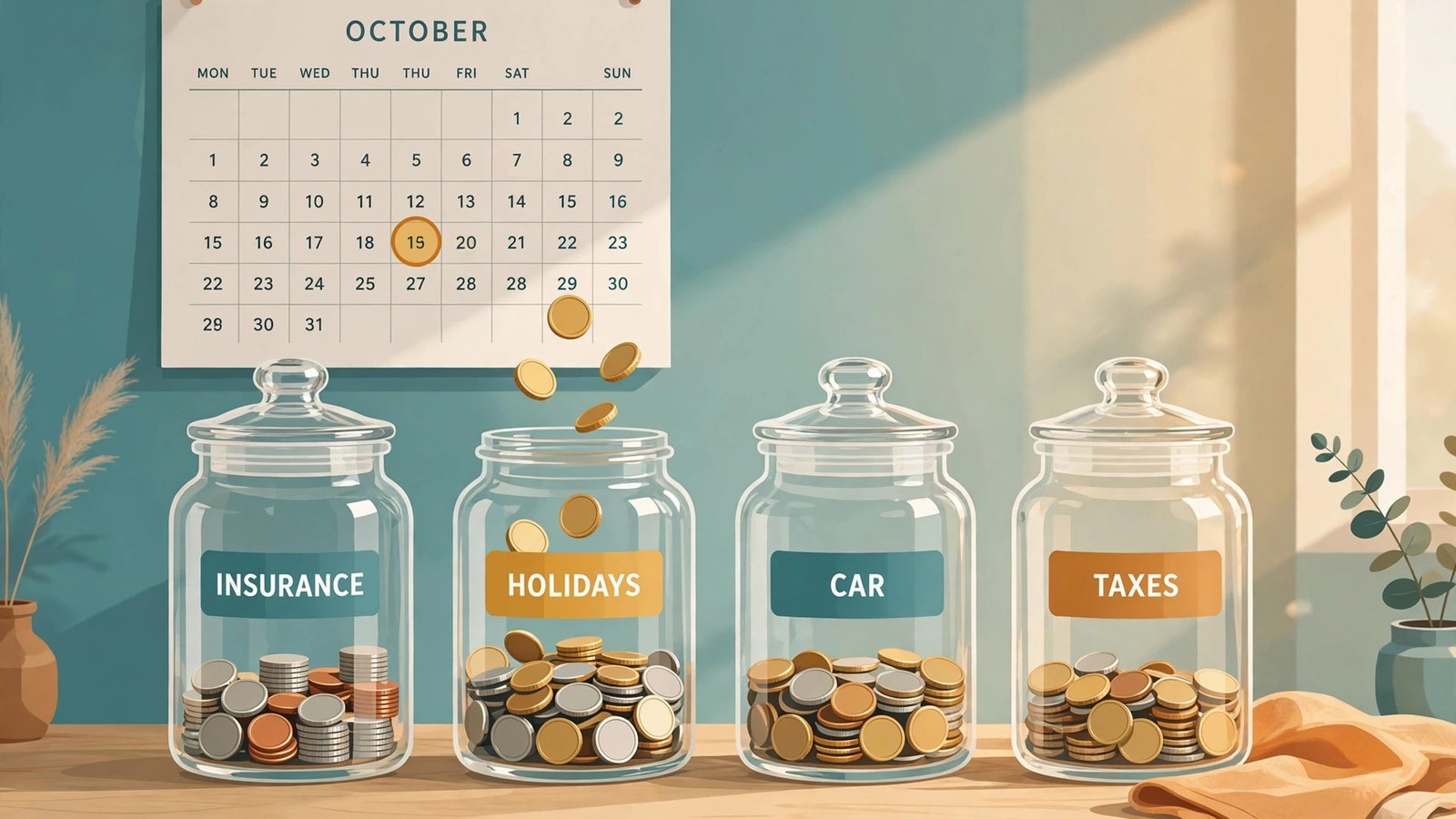
Sinking funds are small monthly savings pots, each one built for a single known future bill: you divide the bill by the months until it is due and save that amount every month. A $1,200 annual insurance premium becomes $100 a month. A $900 holiday budget becomes $75 a month. When the bill arrives, the money is already sitting there, and an expense that used to feel like an emergency becomes a non-event.
The bills are not surprises. You know insurance renews, cars need registering and December shows up every year. They only feel like surprises because nothing in a normal monthly budget makes room for them. Sinking funds fix that one line at a time.
What sinking funds are (and what they are not)
A sinking fund is money you deliberately sink, a little at a time, toward an expense you can already see coming. The defining feature is a specific target: a named bill, a known or estimable amount, and a due date. That separates it from your emergency fund, which exists for expenses you cannot predict, like a dead furnace or a lost job.
Keep the two separate, in purpose and ideally in different accounts. The month you pay your car insurance out of the emergency fund and then the water heater dies, you will understand why. Sinking funds handle the calendar. The emergency fund handles chaos.
Most households have more annual and irregular bills than they think. Add yours up honestly and the total usually lands somewhere between $2,000 and $5,000 a year. Spread monthly, that is a manageable line item. Arriving all at once, it is how credit card balances are born.
The math: every annual bill has a monthly price
The calculation never changes: bill divided by months remaining equals your monthly contribution. Here is what it looks like on real household expenses:
- Car or home insurance premium of $1,200 a year: $100 a month.
- Property tax of $3,600 a year (common where it is billed directly rather than rolled into a mortgage): $300 a month.
- Holiday spending of $900: $75 a month starting in January.
- A $240 vehicle registration renewal: $20 a month.
- Annual subscriptions and memberships totalling $360: $30 a month.
- Car maintenance and tires, estimated at $600 a year: $50 a month.
If a bill is due soon, divide by the months you actually have, not twelve. Insurance renewing in four months on a $1,200 premium means $300 a month until it lands, then the contribution drops to $100 for the following year. The first cycle is the painful one. After that, every fund is on cruise control.
Round contributions up, not down. Saving $105 against a $1,200 bill leaves a small buffer for the premium creeping up at renewal, which it usually does.
How to set up sinking funds at a normal bank
You do not need a budgeting app or a special account type. You need separation and automation, and any ordinary bank or credit union can give you both.
- List your annual and irregular bills with amounts and due months. Insurance, taxes, registration, holidays, annual subscriptions, school and sports fees, pet care, home maintenance.
- Open one extra savings account, or use the sub-accounts and named buckets many banks and credit unions now offer inside a single savings account. Each fund gets a name: 'Insurance,' 'Property tax,' 'Christmas.'
- Set an automatic transfer for the day after payday, moving each fund's monthly amount. Separate transfers per fund are cleaner; one combined transfer works if your bank gives you labeled buckets to sort it into.
- When a bill comes due, move exactly that amount back to checking and pay it. Then restart the fund the following month for next year.
One warning: keeping all your funds as a single lump in your main savings account and tracking the split in your head does not work. The money looks identical, borrows against itself, and evaporates. Separation, even imperfect separation inside one account with labeled buckets, is the entire trick.
Which expenses deserve their own fund
Start with the bills that hurt most when they land, not with an exhaustive list. For most households the starter set is the same:
- Insurance premiums paid annually or semi-annually. Paying annually is usually cheaper than monthly installments, and the fund makes it painless.
- Property tax, if you pay it yourself rather than through a mortgage.
- Holidays and birthdays. December is the most predictable financial ambush of the year.
- Vehicle costs beyond fuel: registration, inspections, tires and routine maintenance.
- Annual subscriptions and memberships. Audit them once a year the way you would any recurring bill; our guide to a cheaper Netflix subscription shows how fast the small ones pile up.
- Home maintenance at a rough 1% of the home's value per year. It will not be spent evenly, but the fund means a new water heater is an errand, not a crisis.
Five to eight funds is the sweet spot for most people. Beyond ten, the system gets fiddly enough that you will stop trusting it, and an abandoned system saves nothing.
The mistakes that sink sinking funds
Raiding is mistake number one. The holiday fund is not a sale fund, and the insurance fund is not a vacation fund. If you want money for deals, give bargains their own small fund; when something on your list goes on sale, check the US deals or Canada deals feed, pay from the fund, and feel smug instead of guilty.
Mistake two is starting everything the same month a bill is due, concluding the contributions are impossibly large, and quitting. Stagger the starts, accept a heavier first cycle on the nearest bills, and remember the math gets easier every single year.
Mistake three is never adjusting the targets. Premiums rise, kids' activities change, and last year's holiday number may not fit this year. Spend fifteen minutes every January updating amounts and due dates, the same annual pass you would give any bill you are negotiating or reviewing. Your future self, opening a fully funded insurance bill in October, sends thanks.
Frequently asked questions
What is the difference between a sinking fund and an emergency fund?
A sinking fund is for a specific, predictable expense with a known amount and due date, like an insurance premium. An emergency fund is for unpredictable events like job loss or a broken furnace. Keep them separate so a planned bill never drains your safety net.
How many sinking funds should I have?
Five to eight covers most households: insurance, property tax, holidays, vehicle costs, annual subscriptions and home maintenance are the usual set. More than ten usually becomes too fiddly to maintain.
Where should I keep sinking fund money?
In a savings account separate from your everyday checking, ideally with named sub-accounts or buckets so each fund is visibly separate. It should earn a little interest but stay instantly accessible, since every fund has a spending date.
What if a bill is due in three months and I have saved nothing?
Divide the bill by three and save that larger amount for this cycle only. A $1,200 premium due in three months costs $400 a month now, then drops to $100 a month for next year's cycle once you are ahead of it.
Should I pay insurance annually or monthly?
Annually is usually cheaper, because most insurers charge installment fees or higher rates for monthly billing. A sinking fund removes the only real obstacle to paying annually: having the lump sum ready on renewal day.